
Qodo
Qodo is an AI-powered code quality and governance platform that automates pull request reviews with full codebase context. It provides specialized review agents that flag real bugs, rule violations, and requirement gaps, reducing review bottlenecks while maintaining quality standards. The platform includes a rules system that turns team knowledge into enforceable standards, a context engine for deep codebase understanding, and governance features like audit trails and risk intelligence. It integrates with major Git providers (GitHub, GitLab, Bitbucket, Azure DevOps) and IDEs (VS Code, JetBrains). Targeted at engineering teams shipping at AI speed, Qodo helps maintain consistent code quality across multiple repositories and teams, with enterprise-grade security options including zero data retention, SOC 2 certification, and on-premises deployment.
Everything worth knowing about Qodo
The complete picture — from everyday features to the technical detail builders and IT folks dig for.
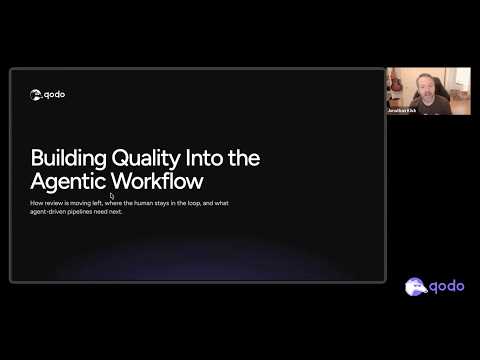
What it actually does
Who uses it
Real use cases, no hype- Integrates with all major Git providers and IDEs seamlessly
- Free 14-day trial with no credit card required
- SOC 2 Type II certified and zero data retention policy
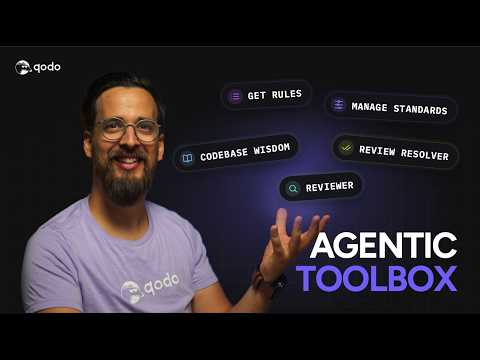
- Dedicated agentic toolbox for AI coding agents
- Deep cross-repo context engine understands complex codebases
- Self-learning rules system mines standards from PR history
- High F1-score on AI code review benchmarks, fewer false positives
- Credit-based pricing can be opaque to estimate monthly costs
- Pro Team plan lacks SSO/SAML and audit logs
- Initial setup and rule configuration requires engineering effort
- Focus on review governance, not full CI/CD pipeline replacement
- Advanced features like BYOK and on-prem are Enterprise-only
- Self-learning rule system needs time to mine and stabilize
- Dependency on proprietary context engine could be a lock-in risk
The deep-dive specs
FAQ
Includes technical Q&ATraffic Insights
Monthly Visits
—
October 2026
Growth Rate
0%
vs last month
Dominance
0%
in Coding
Top Country
—
Top Countries Breakdown
—
Growth Trend
Stable
Traffic has remained stable.
No sneaky tiers, no “contact sales”
Here's who each plan is actually for — and where the hidden charges might hit.
Official pricing, checkout, and plan upgrades are handled directly on qodo.ai.
What the internet actually thinks
Data refreshed weekly. No paid placements.
Leave a Comment
Help others make informed decisions. Your honest feedback shapes the community's understanding of this tool.
Tips for commenting
- •Be specific about features you used
- •Share real use cases and results
- •Mention both pros and cons
- •Keep it honest and constructive
Your comment is published immediately.
No comments yet
Be the first to share your experience with this tool.
Not quite the right fit?
Here's what else is out there.
Codiga
Coding
Automated static code analysis for IDEs and CI/CD, now part of Datadog.

Semantic Kernel
Coding
Microsoft's open-source SDK for integrating LLMs into your C#, Python, and Java apps.

SWE-agent
Coding
AI agent that autonomously fixes bugs and adds features in real GitHub repositories.
Haystack
Coding
Open-source AI orchestration framework for building production-grade agents and RAG systems.
Poolside
Coding
Open-weight agentic coding models for developers.