PathAI

PathAI

PathAI is a platform applying artificial intelligence to anatomic pathology for the biopharma and diagnostic sectors. Its core product, the AISight® Digital Pathology Platform, is a cloud-native system for managing histopathology images and workflows. The platform supports primary diagnosis, research, and clinical trial endpoints through a suite of AI algorithms for tasks like biomarker quantification, tumor detection, and workflow optimization. It targets pathologists, laboratory administrators, and biopharma R&D teams aiming to improve diagnostic accuracy and accelerate drug development.

Search
Visit website
Added on
Sep 18, 2026
Digital PathologyAI DiagnosticsFDA ClearedCloud PlatformBiopharma Focus
Product information

Everything worth knowing about PathAI

The complete picture — from everyday features to the technical detail builders and IT folks dig for.

Core features

What it actually does

Digital Pathology Image Management
Cloud-native, open platform for managing histopathology images and cases, serving as a central hub for digital pathology workflows.
AI-Powered Diagnostic Tools
FDA-cleared (AISight® Dx) and CE-IVDR marked platforms for primary diagnosis and clinical trial endpoints, using AI algorithms for standardized histopathology assessment.
Biopharma & Clinical Trial Support
Services and AI products for biomarker discovery, drug development, and companion diagnostics, used by a majority of top biopharma companies.
Network of Expert Pathologists
Proprietary contributor network of board-certified pathologists providing annotations and interpretations for algorithm training and validation.
Technical capabilities
Integrated AI Algorithm Suite
Offers specialized algorithms like AIM-PDL1, AIM-HER, AIM-Ki67, and AIM-MASH for biomarker quantification, tumor detection, and disease assessment.
Cloud-Native Platform Architecture
Designed for enterprise-scale deployment, integrating with existing laboratory systems and supporting multiple histopathology use cases.
Must watch videos
Philips and PathAI to improve breast cancer diagnosis with artificial intelligence
3:47
Tutorial3:47
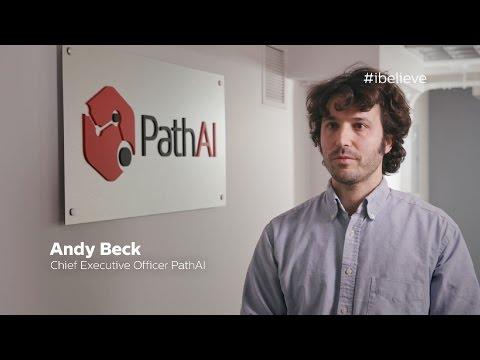
Philips and PathAI to improve breast cancer diagnosis with artificial intelligence
Philips and PathAI team up to improve breast cancer diagnosis using artificial intelligence technology in ‘big data’ pathology research. Royal Philips, a global leader in health technology, and PathAI, a company that develops artificial intelligence technology for pathology, are collaborating with the aim to develop solutions that improve the precision and accuracy of routine diagnosis of cancer and other diseases. The partnership aims to build deep learning applications in computational pathology enabling this form of artificial intelligence to be applied to massive pathology data sets to better inform diagnostic and treatment decisions. The initial focus of this effort is on developing applications to automatically detect and quantify cancerous lesions in breast cancer tissue. transcript: #ibelieve - Breast cancer is one of the largest medical problems faced today. One in eight women will be diagnosed with breast cancer at some point in their lifetime. Therefore it is an area where building new tools to more effectively diagnose the disease and cure the disease can have a major impact on a large proportion of the population. So the central mission of pathology has not change that much in the past few hundred years. It has always been to provide the most useful diagnosis for the patient. But what has changed tremendously is the amount of data at our disposal about the patient about the tissue sample including things like genomic data, transcriptome data, lots of different morphologic data types. And the goal of computational pathology is to enable pathologists to most effectively integrate these data to provide the most useful diagnosis for the patient. Over the past five years there have been huge advances in fields like artificial intelligence and high performance computing and one major aim of PathAI and Philips is to see how can we develop technologies integrating these new approaches to make significant impact on improving how we can diagnose diseases like breast cancer. In pathology, we hope that with the use of deep learning technology, we are able to make pathologists more accurate, efficient as well as consistent. The evolution of deep learning has been very staggering over the past few years. The performance has improved considerably such that the algorithms are even starting to challenge humans. We started with a large dataset that was already analyzed by pathologists. So pathologists got into that image and labeled this is cancer and this is normal. Then we extracted a lot of examples from these images and fed it into our deep learning systems. So they learned to identify cancer pretty good. But then we realized there was a number of areas where they are making mistakes. We took those regions and fed them back into the classifier to improve the performance of the system and that actually allowed the system to improve continuously, achieving an extremely high performance. They perform much better than any systems that people have seen previously in pathology. In terms of identifying where cancer is in a histopathology image. And the best systems did quite well by themselves and pathologists do quite well by themselves and make not than many errors. But the true exciting and potentially transformative thing was when you combine the results of the expert human pathologists with the results of the top performing systems you saw a significant reduction in the overall error rate, showing the best system is really a combination of the strengths of the pathologists with the strengths of the computational system. And that systems performs much better than either one alone. So the really exciting part is being able to integrate these systems into clinical workflows such that they can learn continuously from the pathologist. Enabling the pathologist to focus more on the complex tasks, while the machine handles the more rudimentary aspects. Partnerships are extremely important to building the best products for pathologists. Building effective tools in computational pathology requires expertise in clinical pathology and knowing the workflow of the clinic. And things like high performance computing and artificial intelligence. As well as the field of generally digital pathology and things like whole slide imaging. And to really execute most effectively in each of these different areas, partnerships really enable these things to happen. Therefore we are so thrilled to be working with Philips, who bring enormous expertise in many of these areas and we can really build great things together and will be much stronger than either one of us alone.
Introducing PathExplore
2:07
Tutorial2:07
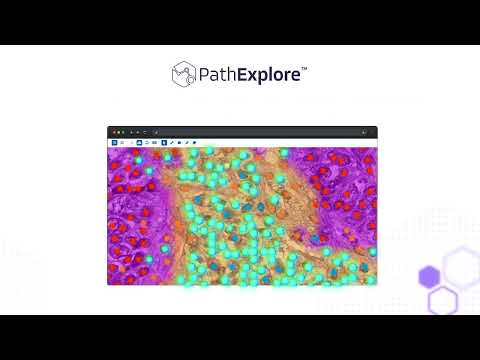
Introducing PathExplore
Intorducing PathExplore, by PathAI, an AI-powered panel of histopathology features that spatially characterize the tumor microenvironment (TME) with single-cell resolution. PathExplore is For Research Use Only. Not for use in diagnostic procedures.
PathAI Biopharma Lab Services for IBD Clinical Trials
2:45
Tutorial2:45
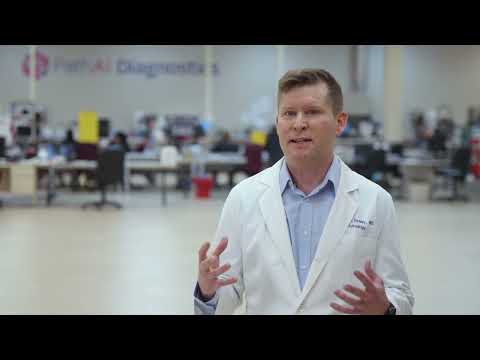
PathAI Biopharma Lab Services for IBD Clinical Trials
PathAI offers end-to-end IBD clinical trial lab services that includes anatomical pathology operations and AI deployment for endpoint assessment.

Who uses it

Real use cases, no hype
Clinical Trial Endpoint Analysis
Standardize histopathology scoring for endpoints like MASH or UC in drug development studies.
Biomarker Quantification
Quantify biomarkers like PDL1, HER2, and Ki67 from IHC slides for companion diagnostics.
Lab Workflow Automation
Deploy AI for triage (ArtifactDetect) and tumor detection (TumorDetect) to prioritize cases.
Research Slide Annotation
Leverage the contributor network to generate high-quality annotations for model validation.
Digital Pathology Migration
Implement AISight as a central hub for image management, replacing legacy scanner systems.
What's great
  • FDA 510(k) cleared platform for primary diagnosis.
  • Deep integration with major biopharma for clinical trials.
  • Offers a comprehensive suite of AI algorithms for specific biomarkers (e.g., MASH, HER2).
  • Regulatory leadership with the first FDA-qualified AI tool for MASH clinical trials.
Technical strengths
  • Cloud-native, open platform architecture allows for scalable deployment and third-party algorithm integration.
  • Leverages a massive proprietary dataset of pathologist annotations for robust model training.
Where it falls short
  • Focus is exclusively on pathology and biopharma; not a general-purpose dev tool.
  • Enterprise sales model; no free tier or obvious self-serve onboarding.
  • Pending acquisition by Roche introduces strategic uncertainty.
Technical limitations
  • Platform specificity may limit flexibility for highly custom research pipelines.
  • Documentation for API/algorithm integration is gated behind demos or partnerships.
For technical folks

The deep-dive specs

FAQ

Includes technical Q&A
Yes, AISight® Dx is an FDA 510(k) cleared digital pathology platform intended for primary diagnosis by pathologists.

Traffic Insights

Monthly Visits

—

November 2026

Growth Rate

0%

vs last month

Dominance

0%

in Search

Top Country

—

Top Countries Breakdown

—

Growth Trend

Stable

Traffic has remained stable.

Pricing overview
Paid Pricing

PathAI Pricing

PathAI uses a paid pricing structure. Real-time rates, custom enterprise quotas, and plan details are managed directly on their official platform.

Check Pricing on PathAI
Reviews

What the internet actually thinks

Data refreshed weekly. No paid placements.

Trustpilot
Not reviewed yet
G2
G2
Not reviewed yet
C
Capterra
Not reviewed yet
Product Hunt
Not reviewed yet
COMMUNITY COMMENTS

Leave a Comment

Help others make informed decisions. Your honest feedback shapes the community's understanding of this tool.

Tips for commenting

  • •Be specific about features you used
  • •Share real use cases and results
  • •Mention both pros and cons
  • •Keep it honest and constructive
to leave a comment

Your comment is published immediately.

Filter:
Sort:

No comments yet

Be the first to share your experience with this tool.

Alternatives

Not quite the right fit?

Here's what else is out there.