Linear B

Linear B

Linear B is an AI-powered text analysis and translation engine designed to process unstructured data. It leverages large language models to perform tasks like semantic parsing, entity extraction, and cross-language translation on complex or ambiguous text. The tool is built for developers and researchers who need to extract structured meaning from raw text inputs. Its core capability is interpreting and transforming text using context-aware AI models, going beyond simple keyword matching. It targets use cases in data processing, content analysis, and multilingual applications where traditional rule-based systems fail. The platform provides an API for integration into workflows requiring deep textual understanding.

Search
Visit website
Added on
Sep 15, 2026
Linear B DecodingClay Tablet OCRPhonetic MappingAcademic Tool
Product information

Everything worth knowing about Linear B

The complete picture — from everyday features to the technical detail builders and IT folks dig for.

Core features

What it actually does

Clay Tablet Decipherment
Decodes ancient Mycenaean Greek script from archaeological artifacts.
Historical Analysis
Provides linguistic and cultural context for deciphered texts.
User-Friendly Interface
Simple upload and analysis tool for researchers and history enthusiasts.
Multi-Language Support
Handles script variations and related ancient languages.
Technical capabilities
Symbol Recognition Engine
Proprietary CNN trained on digitized tablet corpora for high-accuracy glyph mapping.
Phonetic Reconstruction
Uses Bayesian inference models to map syllabic symbols to reconstructed Mycenaean phonetics.
Must watch videos
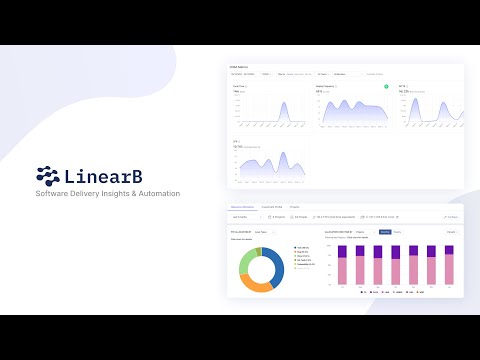
Software Engineering Intelligence with LinearB
3:13
Tutorial3:13
Software Engineering Intelligence with LinearB
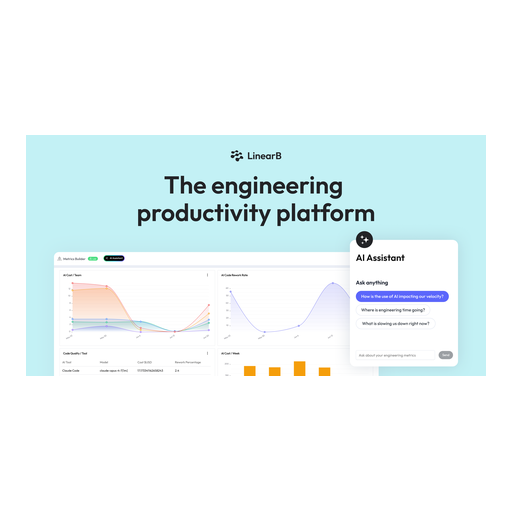
Software engineering leaders create the value that drives revenue. To succeed, they have to fulfill a dual mandate: maximize operational efficiency and align their resources to business goals. Answering the dual mandate begins with LinearB's software engineering intelligence solutions. Combining software delivery insights, engineering investment visibility, and workflow automation, LinearB helps leaders deliver more business value, improve developer efficiency, and foster a culture of predictable software delivery. Using LinearB’s 5-step engineering success model, engineering leaders will see better outcomes. Learn more about each step in the links below: Step 1: Engineering Metrics Program ►►https://linearb.io/resources/engineering-leader-guide-to-building-a-metrics-program?utm_source=Youtube&utm_medium=social&utm_campaign=202402+-+Video+-+SEI Step 2: Resource Allocation ►► https://linearb.io/resources/engineering-leader-guide-to-resource-allocation?utm_source=Youtube&utm_medium=social&utm_campaign=202402+-+Video+-+SEI Step 3: Business Goals & Reporting ►► https://linearb.io/resources/engineering-leader-guide-to-goals-and-reporting?utm_source=Youtube&utm_medium=social&utm_campaign=202402+-+Video+-+SEI Step 4: Programmable Workflows ►► https://linearb.io/resources/engineering-leader-guide-to-programmable-workflows?utm_source=Youtube&utm_medium=social&utm_campaign=202402+-+Video+-+SEI Step 5: Predictable Project Delivery ►► https://linearb.io/resources/engineering-leader-guide-to-predictable-project-delivery?utm_source=Youtube&utm_medium=social&utm_campaign=202402+-+Video+-+SEI If you want to take the first steps to predictable project delivery, reach out and we'll be happy to help: https://linearb.io/book-a-demo?utm_source=Youtube&utm_medium=social&utm_campaign=202402+-+Video+-+SEI
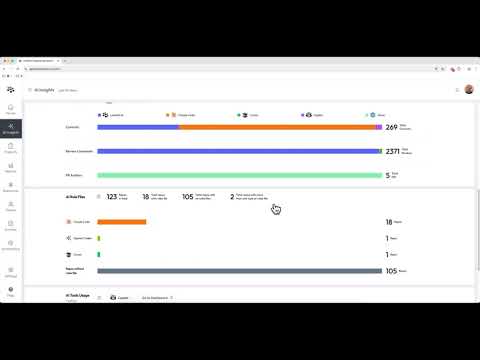
AI Insights Dashboard Demo
4:50
Tutorial4:50
AI Insights Dashboard Demo
Understanding the true impact of AI tools on productivity is a key challenge for engineering leaders. It's essential to know if these tools are improving performance or creating downstream issues, such as increased code rework. In this quick demo, Andrew Zigler from LinearB shows you how to use the AI Insights Dashboard to get a comprehensive view of how AI tools affect your software delivery lifecycle. You'll see how to measure AI adoption and its impact on your engineering organization's performance. In this video, you'll learn how to: • Compare AI-generated code vs. human-driven activity (commits, comments, PRs) to see a clear distribution of AI's footprint. • View trends on AI tool adoption and code acceptance rates over time. • Correlate AI usage with key quality metrics like Rework Rate, Refactor Rate, and PR Size to understand its downstream impact. • Combine these quantitative metrics with qualitative developer feedback from Surveys to get a complete, holistic view of AI's effectiveness. To get these actionable insights for your own team, start a free trial: ➡️ https://linearb.io/start-free-trial Questions? 💻 Learn more about LinearB: https://linearb.io/ 📩 Book a demo: https://linearb.io/book-a-demo?utm_source=YouTube&utm_medium=social&utm_campaign=202504-ai-product-announcement&utm_content=Workshop Chapters: 00:00 Introduction 00:18 Compare AI vs. Human Activity (Commits, Comments & PRs) 01:32 Track Developer Adoption & Acceptance Rates 02:26 Combine with Qualitative Survey Feedback 03:36 Correlate AI Impact on Rework & Refactor Rates 04:38 Summary
Beyond Copilot: What’s Next for AI in Software Development
56:00
Tutorial56:00
Beyond Copilot: What’s Next for AI in Software Development
In this webinar, Andrew Zigler chats with experts Adnan Ijaz (AWS), Birgitta Böckeler (Thoughtworks) and Suzie Prince (Atlassian), about AI's evolving role in the software development lifecycle. Drawing insights from LinearB's DevEx Guide to AI Driven Software Development report, the panel explores opportunities beyond code generation, strategies for measuring AI's impact, and how to foster responsible AI experimentation. Discover how leading tech companies are thinking about AI from requirements and architecture through to deployment and beyond. In this webinar, you'll learn about: • Key findings from the DevEx Guide to AI Driven Software Development • Opportunities for AI in non-coding SDLC stages like requirements, architecture, and PR reviews. • How leaders from Atlassian, AWS, and ThoughtWorks approach AI adoption and agentic AI. • Strategies for measuring the true impact of AI tools, moving beyond individual productivity metrics. • The importance of qualitative feedback, code quality, and risk monitoring with AI. • Fostering a culture of responsible AI experimentation, balancing curiosity with safety and ethics. • Understanding and addressing bottlenecks in the SDLC created or impacted by AI. • LinearB's approach to AI-driven automation and observability in development pipelines. Questions? 💻 Learn more about LinearB: https://linearb.io/ 📩 Book a demo: https://linearb.io/book-a-demo?utm_source=YouTube&utm_medium=social&utm_campaign=202504-ai-product-announcement&utm_content=Workshop Chapters: 00:00 Welcome and Introduction 01:52 Overview of Today's Webinar 02:29 Introduction to the DevEx Guide 03:25 Meet the Expert Panelists 05:54 AI's Impact on the SDLC 17:31 Measuring the Impact of AI Rollouts 28:37 Risk Monitoring and Debugging with AI 30:03 Experimenting with AI in Development 31:50 Responsible AI Usage 36:25 Balancing Enthusiasm and Skepticism 42:58 Automation and AI in Code Review 46:51 Closing Thoughts and Future Directions

Who uses it

Real use cases, no hype
Linguistic Research
Analyze phonetic patterns and word frequencies in a Bronze Age script.
Digital Humanities Project
Build a web interface or visualization tool for exploring Linear B tablets.
ML Model Training
Create a dataset for training a script recognition or translation model.
Educational Tool
Develop an interactive learning module about ancient writing systems.
What's great
  • Direct access to a foundational dataset for ancient languages.
  • Core dataset for linguistic and archaeological research.
  • Provides raw, unprocessed source material for digital humanities.
Technical strengths
  • Open data allows for custom machine learning model training.
  • Well-structured text files enable straightforward parsing.
Where it falls short
  • Niche focus, not useful for general software development.
  • Data format is archaic; requires custom normalization.
  • No documentation or API; it's just raw text files.
Technical limitations
  • Lacks structured metadata for automated analysis.
For technical folks

The deep-dive specs

Core Technology
Hybrid CNN-Bayesian Inference Model
Training Data
Corpus of 4,000+ digitized clay tablet inscriptions
Output Format
Phonetic transcription, Modern Greek equivalent, Unicode text

FAQ

Includes technical Q&A
Linear B is an ancient syllabic script used for Mycenaean Greek, deciphered in 1952 from clay tablets found in Crete and mainland Greece.

Traffic Insights

Monthly Visits

—

October 2026

Growth Rate

0%

vs last month

Dominance

0%

in Search

Top Country

—

Top Countries Breakdown

—

Growth Trend

Stable

Traffic has remained stable.

Pricing overview
Paid Pricing

Linear B Pricing

Linear B uses a paid pricing structure. Real-time rates, custom enterprise quotas, and plan details are managed directly on their official platform.

Check Pricing on Linear B
Reviews

What the internet actually thinks

Data refreshed weekly. No paid placements.

Trustpilot
Not reviewed yet
G2
G2
Not reviewed yet
C
Capterra
Not reviewed yet
Product Hunt
Not reviewed yet
COMMUNITY COMMENTS

Leave a Comment

Help others make informed decisions. Your honest feedback shapes the community's understanding of this tool.

Tips for commenting

  • •Be specific about features you used
  • •Share real use cases and results
  • •Mention both pros and cons
  • •Keep it honest and constructive
to leave a comment

Your comment is published immediately.

Filter by rating:
Sort by:

No comments yet

Be the first to share your experience with this tool.

Alternatives

Not quite the right fit?

Here's what else is out there.